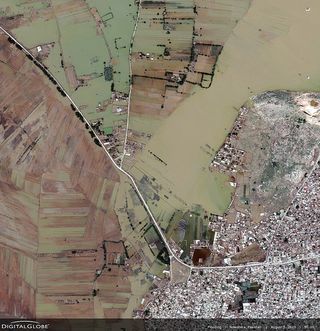
 Within six months of the Haiti earthquake, private donors gave more than US$1.3 billion. Appeals to give were seen in traditional and social media. Hollywood stars like Oprah and Lady Gaga personally gave and asked for public support. Philanthropy advisors and bloggers provided advice on how to give during a disaster and some even coordinated on the ground conference call updates. But the response to the recent Pakistan flooding situation is starkingly different. No appeals from Hollywood stars, no mass media coverage, very few bloggers are covering the event and so far, no sources have provided a tally of how much donors have given or how much organizations have received. Why? And, where is philanthropy's response?
Immediate catastrophes and scale of impact
The Haiti earthquake killed an estimated 230,000 people. The Kashmir earthquake killed over 80,000 people. As of today, officials are reporting a death toll of 1,500 and at least 14 million people have been made homeless. With such a small number of deaths, it is hard to grab the attention of the media and donors. Experts say that the impact of floods are perceived as less catastrophic when compared to earthquakes and tsunamis. Earthquakes and tsunamis have high numbers of immediate deaths while the impact of floods are more ongoing and long-term.
Floods require the movement of people away from the floods and onto higher ground. Farmland and crops are destroyed. Homes are inhabitable. Floods also create water-borne diseases that eventually cause medical issues. The impact of loss from floods are slowly uncovered as the water recedes and the damages continue to roll in. By then, the media has moved on to other news-worthy issues and the donor's attention is distracted by another cause.
Donor fatigue and tough economic times
Reports have cited donor fatigue and tough economic times for the decrease in donations to Pakistan's floods victims. While western countries are facing tough economic times now, they were also facing similar conditions in January during Haiti's earthquake. Yet, US$1.3 billion was raised from private sources in the U.S.
It seems to me that timing may be one factor when it comes to how much and if individuals, corporations and foundations will respond to a disaster. The 2004 Indian Ocean Tsunami and the early January earthquake occurred near the holidays and the new year, when people were in a more charitable mood. Further, the timing of charitable tax deductibility may also play a role. The U.S. government approved a new tax relief law allowing people who contributed in 2010 to charities providing earthquake relief in Haiti to take a tax deduction for the contribution on their 2009 tax return instead of their 2010 return. Donors received an immediate tax benefit rather than having to wait until next year.